
SELECTED PUBLIC COMMISSIONS
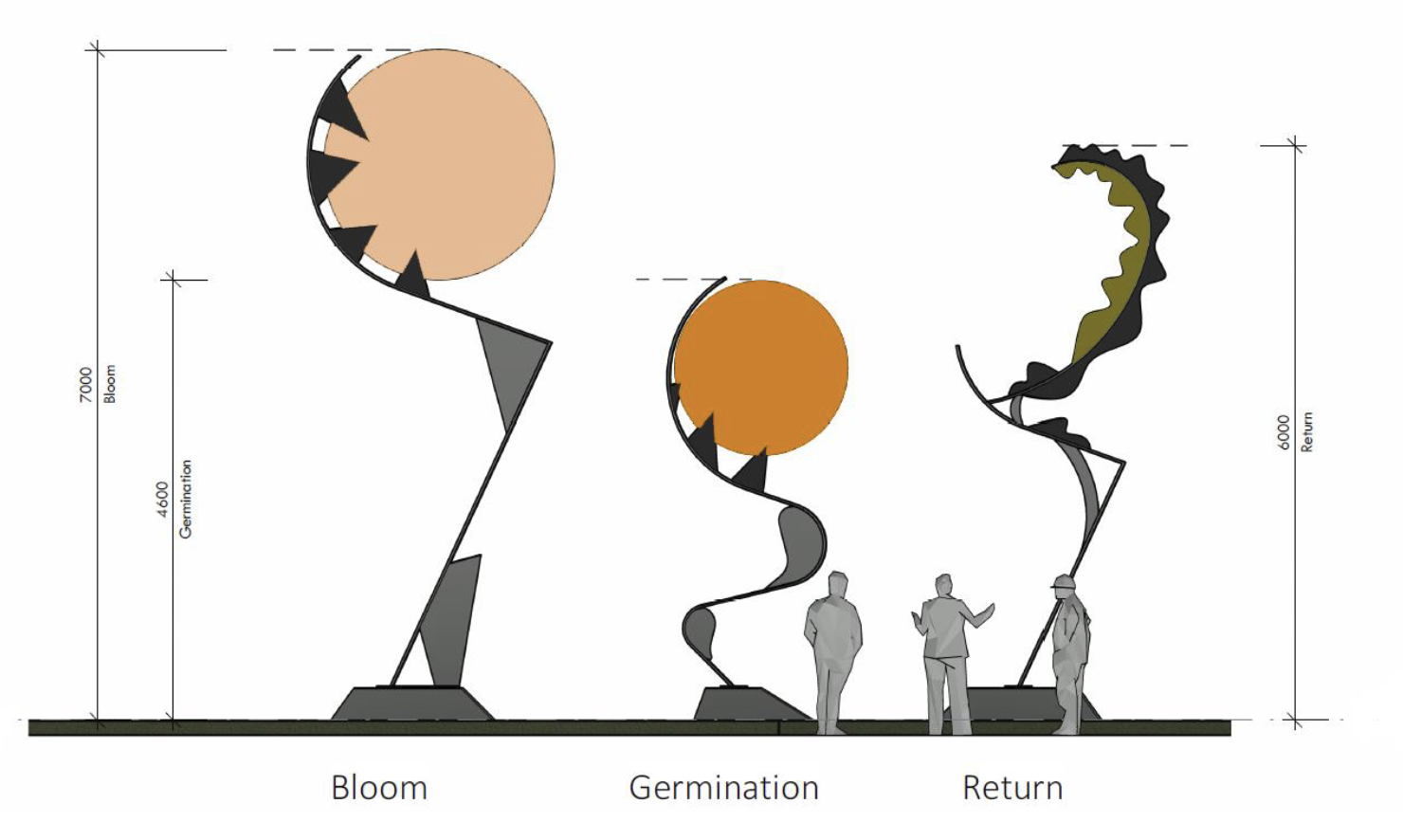
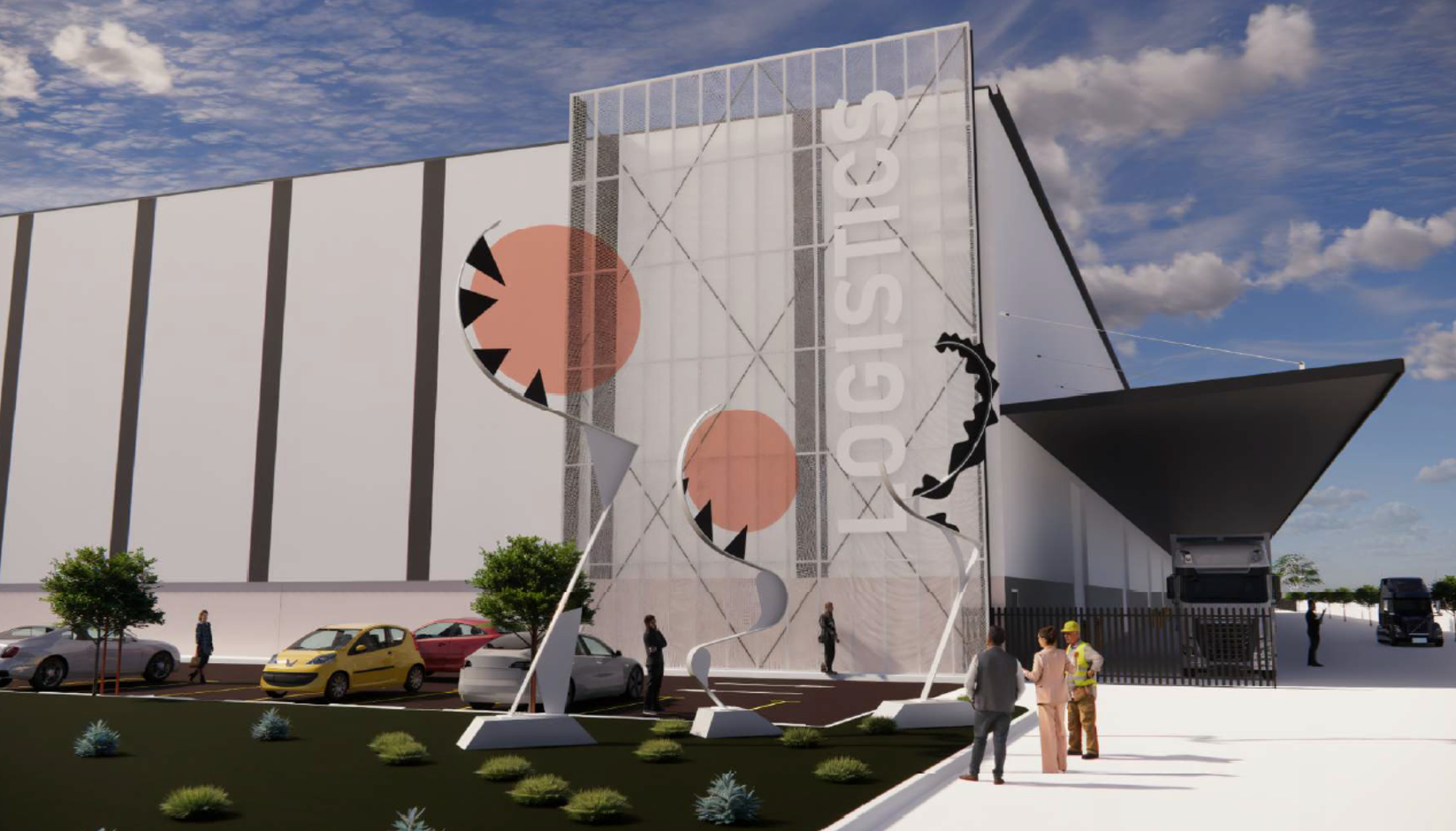
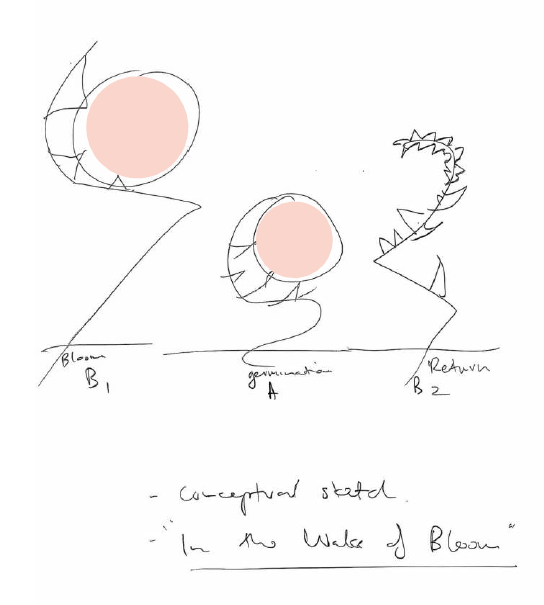
IN THE WAKE OF BLOOM, 2026 (in production)
Sculptural grouping:
Bloom 7m; Germination 4.6m; Return 6m
Glass and steel
City of Swan, 26 Central Av., Hazelmere, WA
In the Wake of Bloom is a sculptural meditation on ecological cycles of emergence, decline and return. Comprising three interconnected forms — Bloom, Germination and Return — the work considers regeneration not as a linear progression, but as an ongoing process of transformation.
Embedded within Christie-Coxon’s Circle Culture framework, the work responds to light, shadow, weather and the movement of viewers through the site. These changing conditions continually alter its presence, allowing the sculpture to participate in the rhythms of its environment rather than remain visually fixed.
Situated within a landscape shaped by both human activity and ecological processes, In the Wake of Bloom invites reflection on consequence, reciprocity and our participation within the living systems we affect.
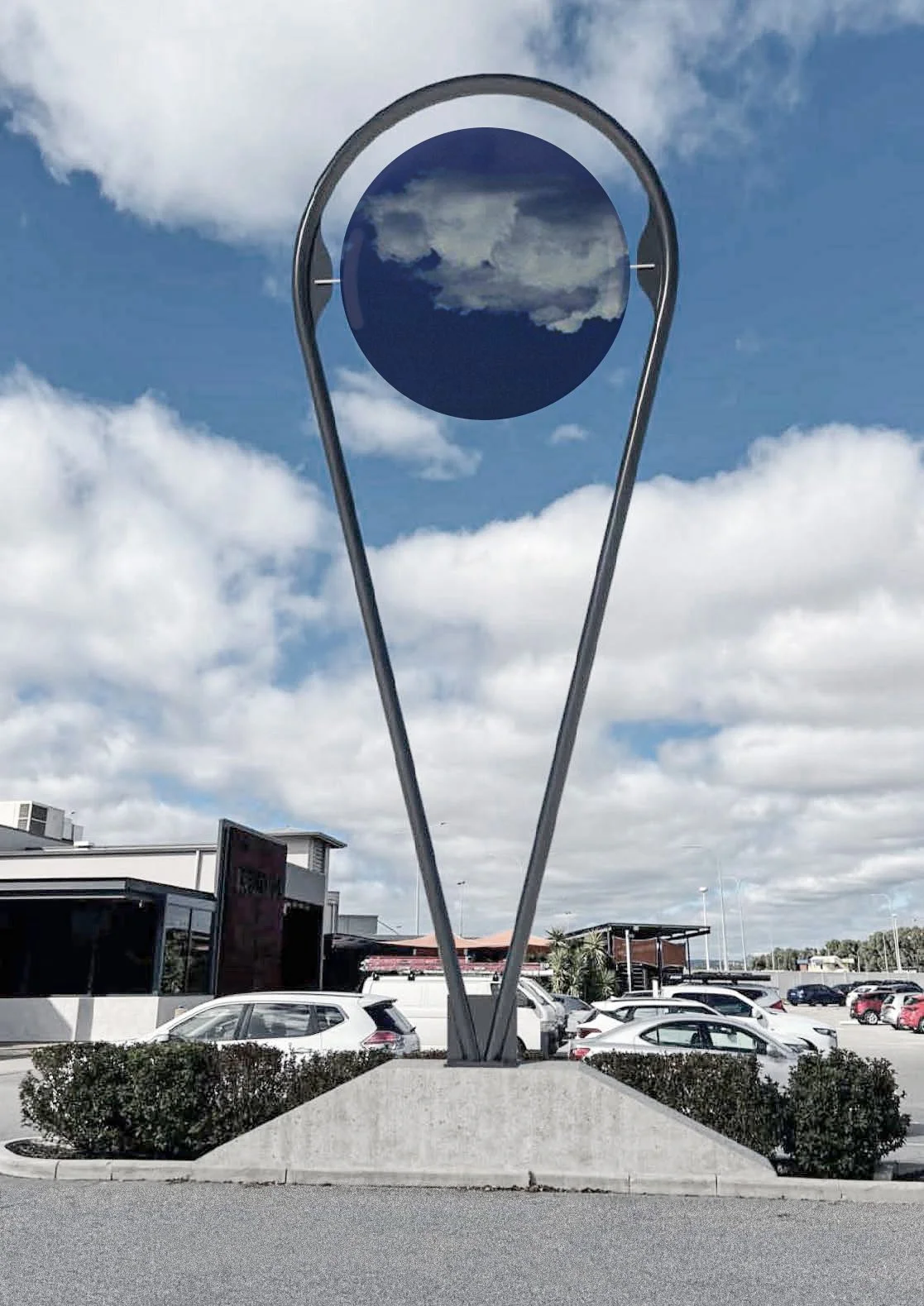
ENVIROSPHERE, 2026 (in production)
Glass, powder coated steel and concrete, 8m x 3m x 1m
City of Belmont, 137 Kewdale Road, Kewdale, WA
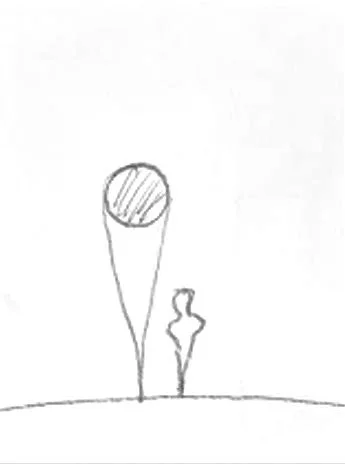
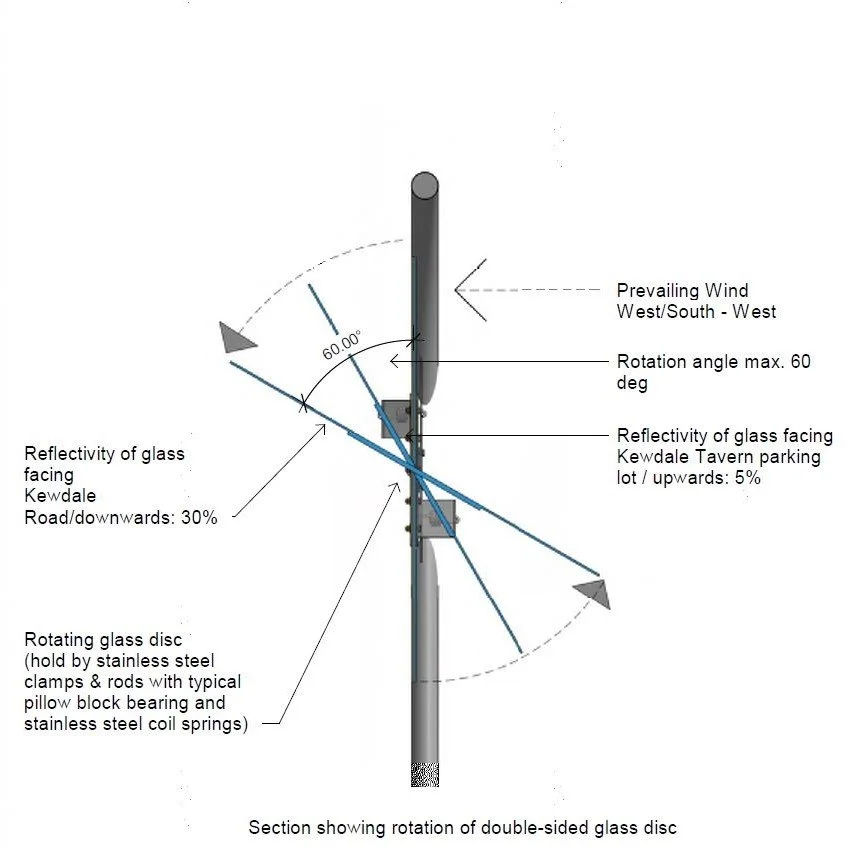
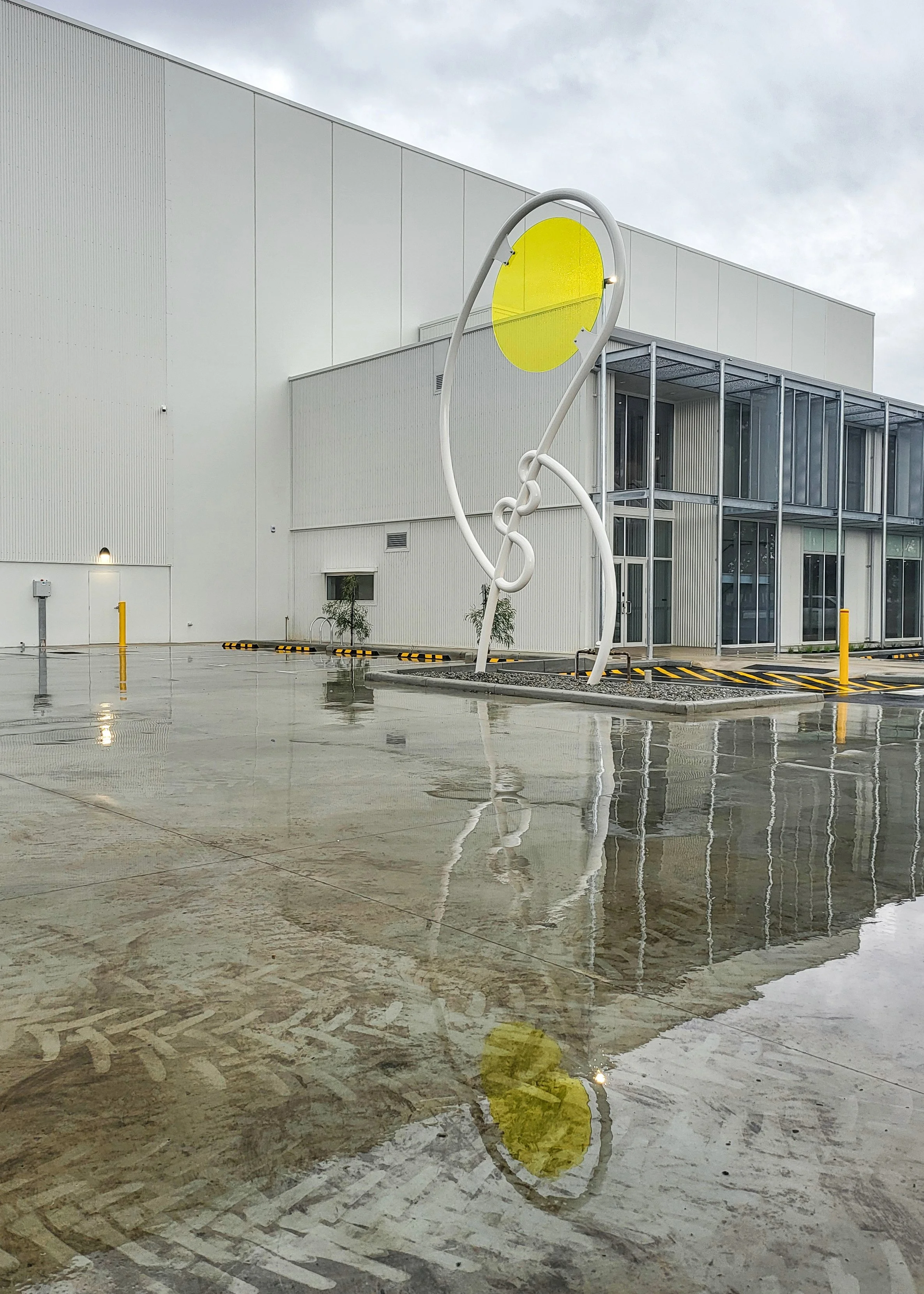
Envirosphere is a kinetic, site-specific sculpture situated within an industrial landscape adjacent to Perth Airport. Its reflective circular plane captures fragments of infrastructure, horizon and sky, while wind causes the work to shift around its central axis.
The environment therefore participates directly in what the work becomes. Reflections change with weather, light, movement and viewpoint, continually reconfiguring the relationship between the constructed and living worlds.
The pivoting axis introduces a point of instability — a physical and conceptual tipping point that reflects the precarious balance of ecological systems. The work also acknowledges the rehabilitation of the nearby Tomato Lake wetlands, connecting environmental consequence with the possibility of repair.
SOLARSPHERE, 2026
Glass, powder coated steel and concrete, 8m x 3m x 1m
City of Belmont, 6 Ferguson Street, Kewdale, WA
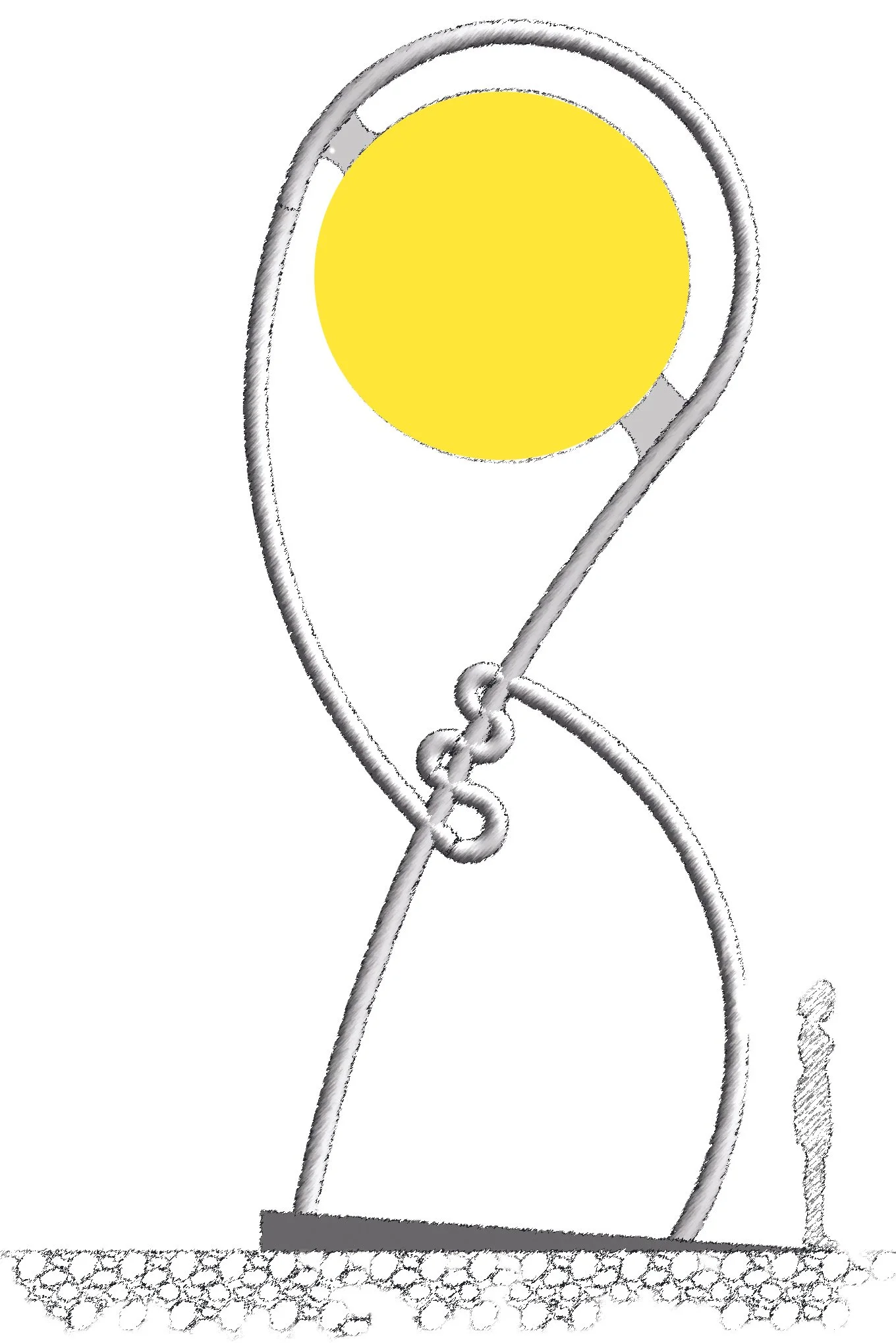
Solarsphere was conceived in dialogue with the nearby Envirosphere, forming a pair that explores difference, interdependence and exchange within an industrial and ecologically rehabilitating landscape.
Where Envirosphere reflects and pivots in response to its surroundings, Solarsphere draws upon the energy and symbolism of sunlight, growth and radiance. Together, the works hold a series of apparent oppositions — constructed and living, reflective and radiant, stability and movement — without seeking to resolve them.
Rather than functioning as opposites, the two sculptures operate relationally: each alters how the other is perceived. Their dialogue reflects Christie-Coxon’s broader interest in paradox and in systems whose elements remain distinct while participating within a larger field of exchange.

WATER’S WAY, 2024
Metal coated steel. 5.3m x 5m x 0.5m
City of Kalamunda, 80 Nardine Close, High Wycombe, WA
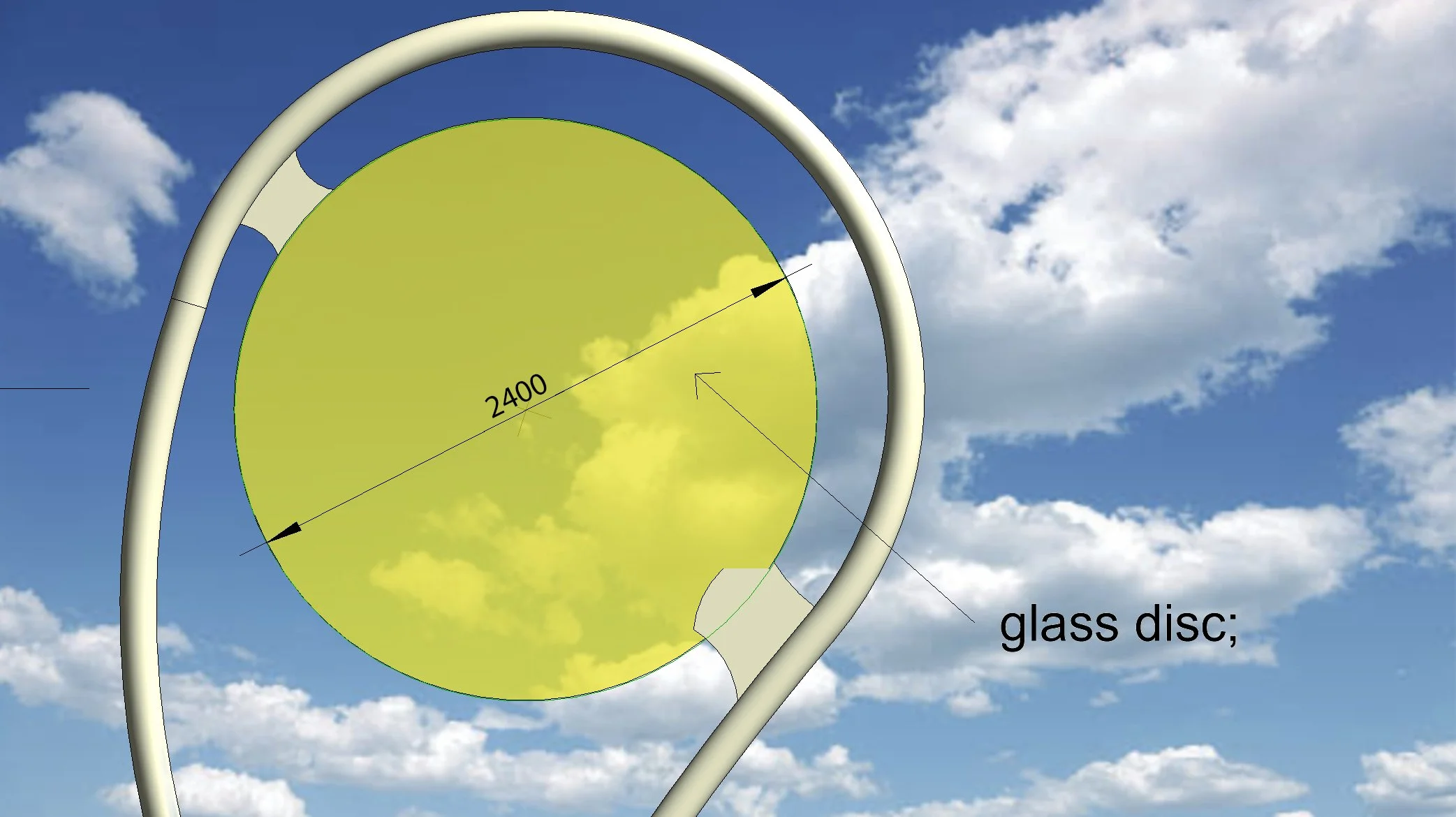
Water’s Way responds to Western Australia’s relationship with water and the wetland systems surrounding its site. Its circular form and curved linear openings evoke movement, flow and recurring cycles, while shifting reflections and shadows allow light, weather and the movement of viewers to continually alter the work.
Situated between natural and constructed environments, the sculpture considers water not simply as a resource or subject, but as part of the interconnected systems upon which human and more-than-human life depend.


LAND UNDER SUN & MOON OVER OCEAN (Diptych), 2024
Glass, steel and aluminium,
3m in diameter x 0.2m each
Perth Transport Authority, Alkimos Train Station, WA
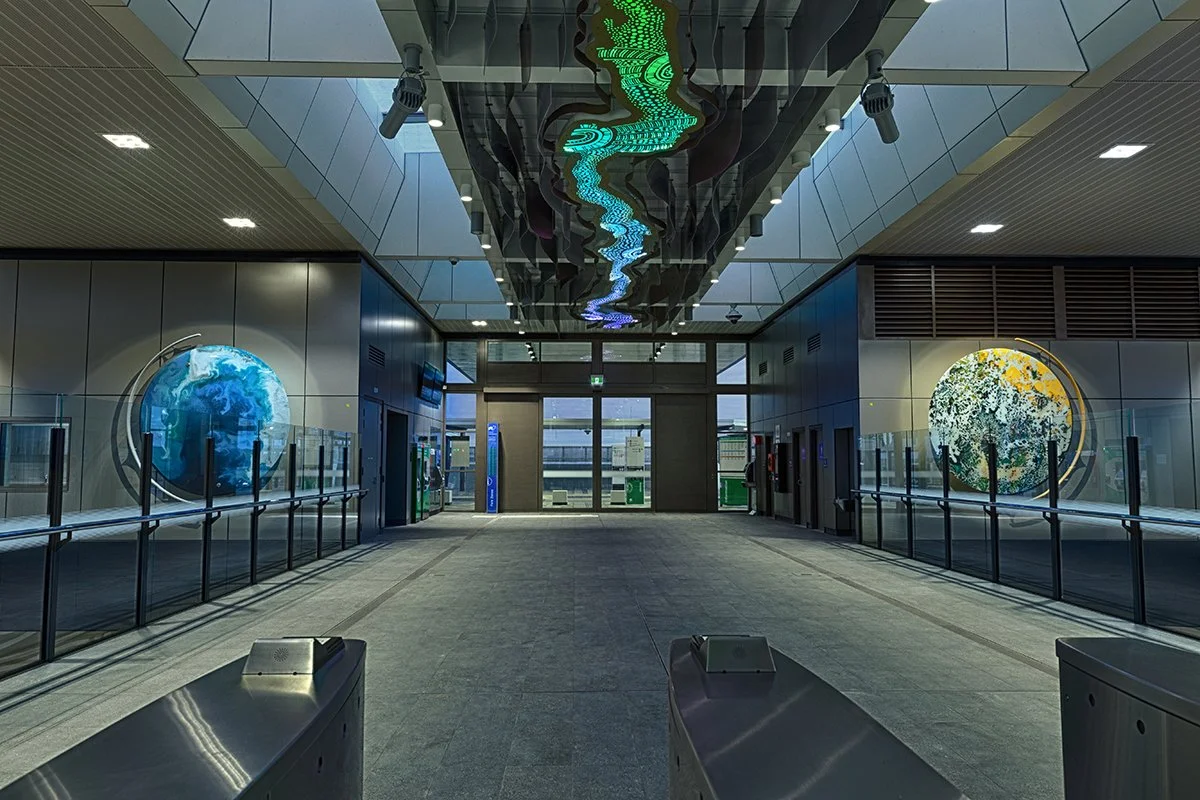
Land Under Sun & Moon Over Ocean is a public art diptych inspired by the elemental conditions of Western Australia. The works incorporate magnified details from Christie-Coxon’s process-driven paintings, where fluid materials form patterns suggestive of geological, aquatic and atmospheric processes.
The two monumental circular forms extend these painterly investigations into architectural space, exploring relationships between land and ocean, day and night, movement and time. Their form also references the familiar station clock, shifting the measurement of time from the everyday toward the larger recurring rhythms of light, season and the solar system.
The works are positioned in relation to their site: Moon Over Ocean oriented west toward the Indian Ocean and Land Under Sun east toward the land. Through this orientation, painting, architecture and place become connected through both terrestrial and celestial cycles.


LIBERATION, 2019
Temporary Light Installation
Full building façade Mapping Projection of Paint Animations
The Cloisters, 200 St. Georges Terrace, Perth, WA
Liberation is a temporary light installation that brings the material language of painting into dialogue with digital technology and architecture. Macro-details from Christie-Coxon’s paintings were digitally animated and projected across the façade of The Cloisters, transforming the historic building through light and movement.
The work explores a series of dichotomies — old and new, material and digital, past and present. At its core, Liberation operates as a contemporary intervention over a colonial structure, temporarily disrupting the visual authority and permanence of its architecture.


PROCESSING PAINT, 2019
Temporary Light Installation
Digital animation of 15 paint studies. 2.6m x 6m.
Cloisters Square, Perth
Processing Paint explores the micro-events occurring within fluid, process-driven painting. Through digital magnification and animation, painterly details shaped by chemical interaction, gravity and material flow are enlarged to architectural scale.
At this stage in Christie-Coxon’s practice, these processes were contributing to a developing enquiry into circularity, fluidity, duality and interconnected systems. Magnified details create perceptual ambiguities, appearing simultaneously suggestive of aerial landscapes, geological formations, biological structures and microscopic worlds.
The work considers perception itself as an active process. Familiar shapes, tones and textures encourage associations between the material behaviour of paint and forms encountered elsewhere in the living world, while meaning ultimately remains contingent upon the experience and interpretation of the viewer.
“Our eyes act as our translator from the external world into the internal world. The brain’s job is to make sense of what comes in from its sensory apparatus. Familiar shapes, tones, and textures are revealed in the paint, as seen in geography and biology. Crucially, it is the viewer’s assignment of personal meaning that remains key to the comprehension of these works.”

UNIFY, 2022 (unrealised)
PVC, Polypropylene, stainless steel. 8m Diameter
Sculptures by the Sea, Perth, WA
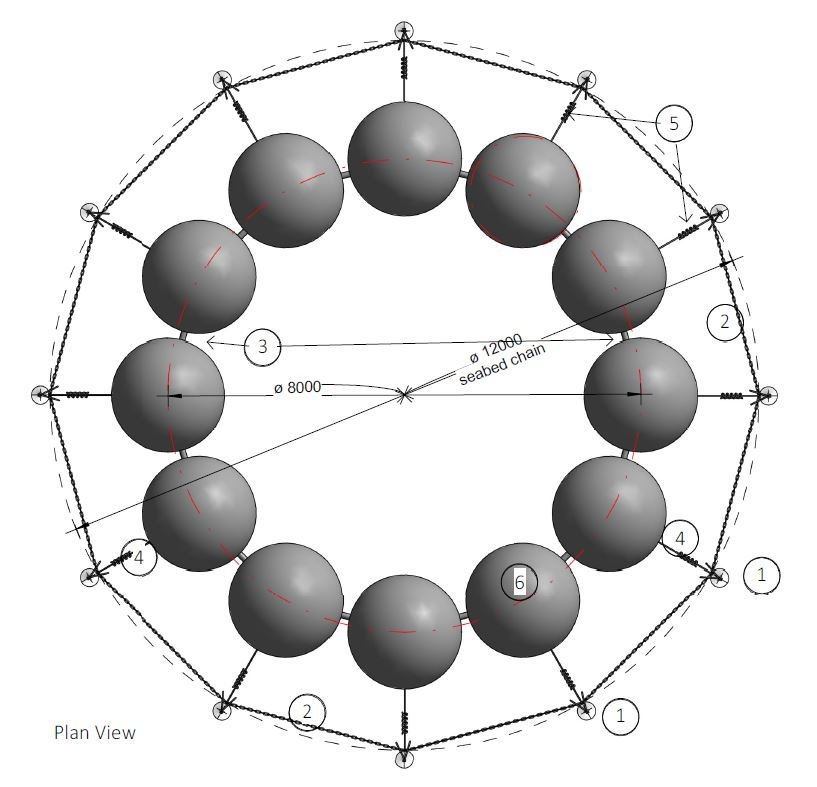
Unify was conceived as a floating sculptural work exploring community, inclusivity, adaptability and collective resilience. Individual buoyant spheres are joined to form a circle, creating a collective structure that remains responsive to the changing conditions of the ocean.
Wind, waves and currents would continually alter the relationship between its individual elements. The spheres might separate, collide and shift while remaining connected within the larger form.
Through this simple physical behaviour, Unify considers the relationship between individual and collective experience, and the capacity to remain connected through conditions of change and disruption.


PLAY, 2020 (unrealised)
Aluminium and steel. 9m x 0.96m
Awarded artist for public artwork at Coogee Early Learning Centre
Play was conceived for an early learning environment as an open-ended sculptural form encouraging imagination, curiosity and individual interpretation. Its expressive forms draw upon the spontaneity and freedom of mark-making, allowing different associations to emerge according to the perspective of each viewer.
Positioned at an angle to the surrounding architecture, the work deliberately resists conventional alignment. Its orientation introduces movement and visual instability, encouraging curiosity and a sense of possibility.
The work draws inspiration from The Hundred Languages, an educational philosophy that recognises the many ways children communicate, imagine and make meaning. In this context, Play celebrates experimentation, independent thinking and freedom of expression.


TREAD LIGHTLY, 2024 (unrealised) Perspex, stainless steel and concrete.
92.7m diameter
Tread Lightly is a monumental, life-scale interpretation of the tread pattern of an Off-the-Road mining tyre, a form closely associated with the extractive industries of Western Australia’s Pilbara region.
By enlarging and isolating the tread, the work transforms an industrial object into a physical trace of human movement across landscape. Its immense scale draws attention to both the infrastructure required for extraction and the material consequences that remain after resources have been consumed.
Mining tyres present a significant waste challenge due to their scale, material composition and limited pathways for reuse. Tread Lightly considers this discarded material through the principles of circularity, asking whether what is understood as waste might instead re-enter systems of use and transformation.
The title carries a deliberate paradox: an object associated with immense weight and industrial impact becomes an invitation to consider how lightly — or otherwise — we move through the environments upon which we depend.

