

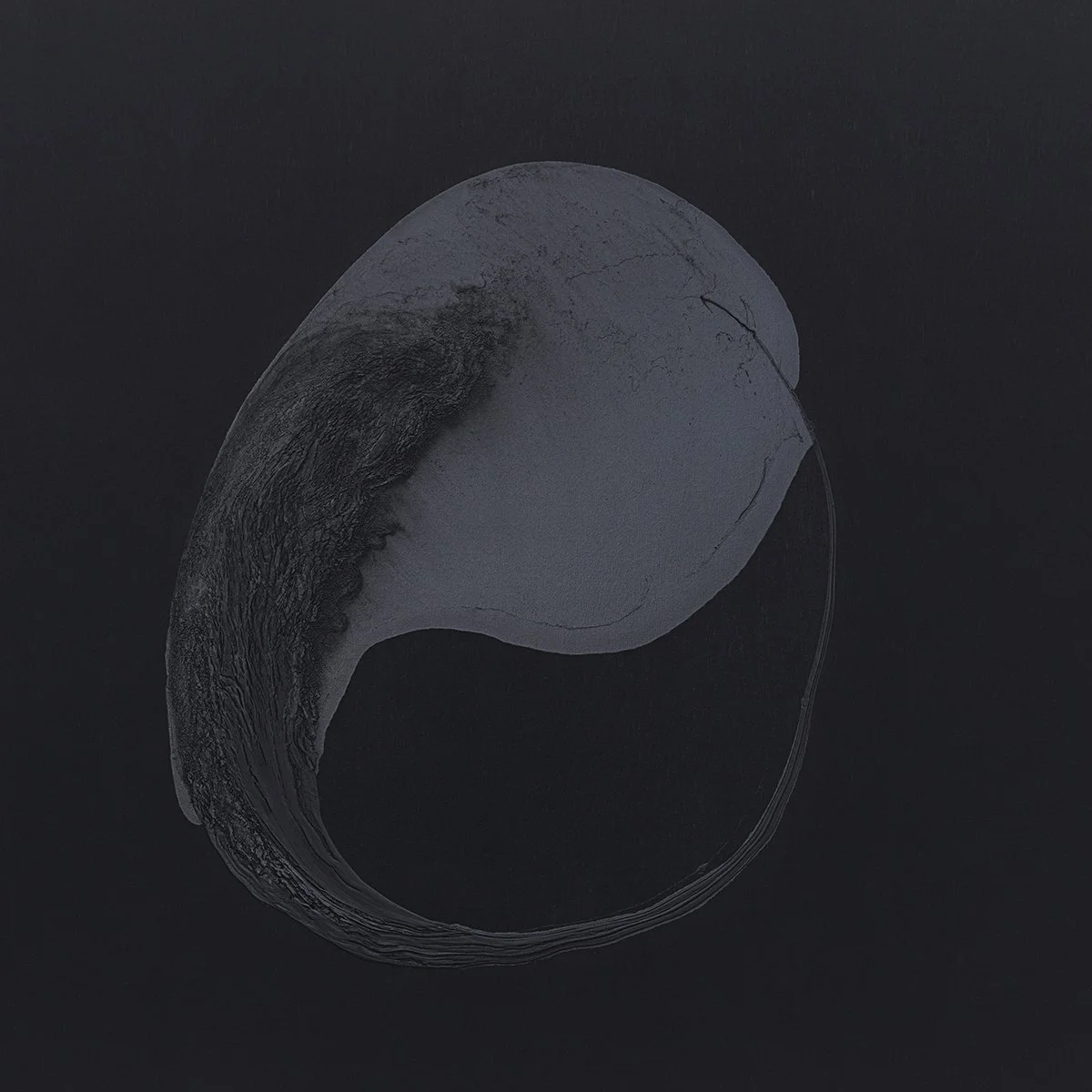

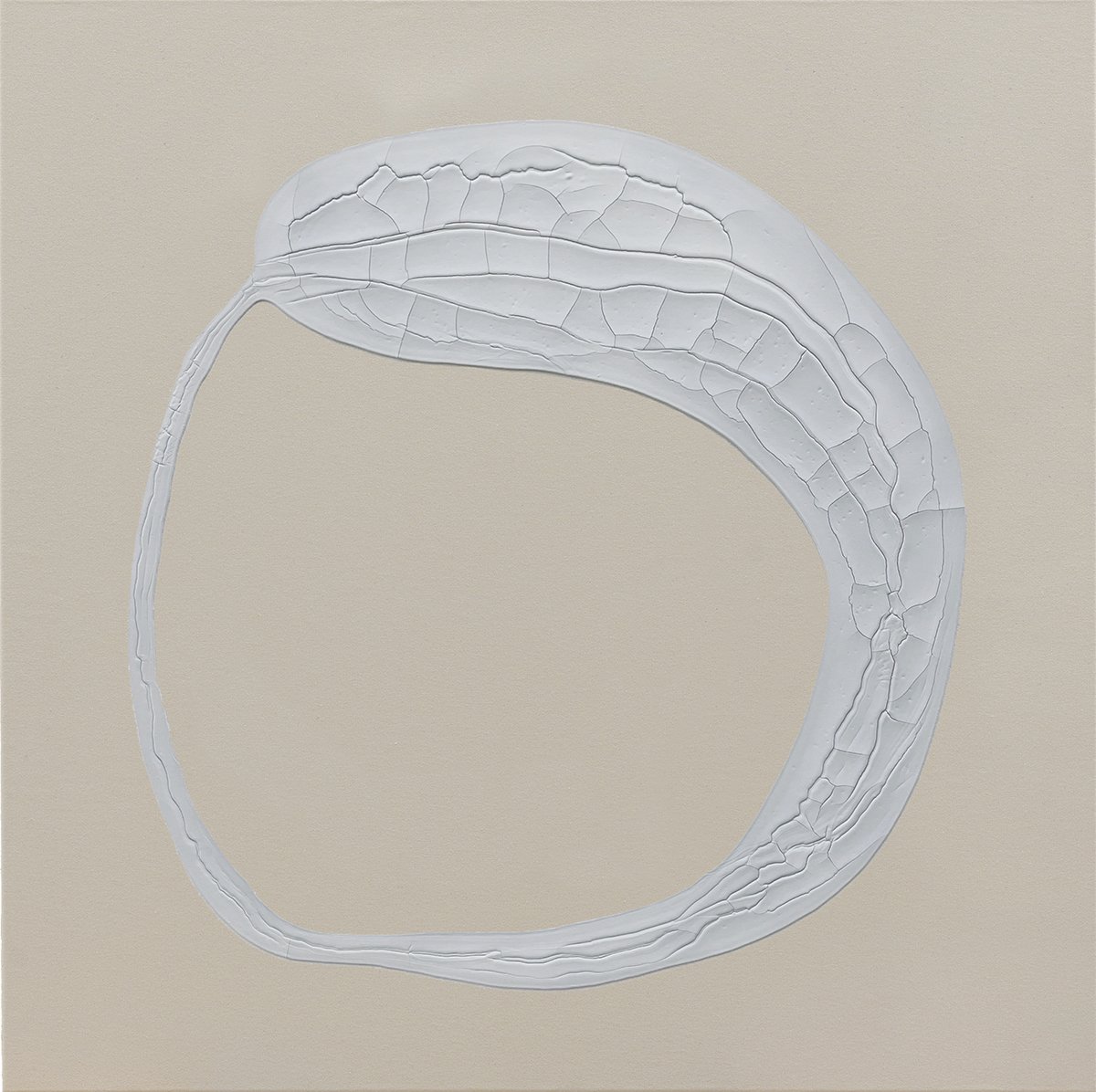

Painting has been a generative foundation of Caroline Christie-Coxon’s practice for more than three decades. Through fluid, process-led methods, material is directed without being fully controlled, allowing gravity, viscosity, chemical interaction, time and movement to participate in the formation of the work.
Rather than working toward a predetermined image, Christie-Coxon creates conditions from which the painting can emerge. Intention and intuition remain present, but the behaviour of materials introduces forces that cannot be entirely anticipated. The work is neither controlled nor left to chance; it develops through relationship between artist, material, process and time.
It was through painting that many of the principles underlying Christie-Coxon’s wider practice first became visible: fluidity, emergence, transformation, circularity, paradox and return. The Fluid Loop developed from these processes, its recurring form becoming a means of considering continuity and relationship without implying stasis or resolution.
Over time, these material investigations moved beyond the fixed canvas. Painting became increasingly porous and mobile through the Soft Paintings, while its underlying methodologies extended into sculpture, photography, video, the body and site-responsive encounters.
Painting nevertheless remains an active field of enquiry within the practice — a place where material can behave, uncertainty can remain productive, and knowledge can emerge through the act of making.
“I work through doing — through the physical negotiation with material. Paint is a substance I enter into relationship with: it behaves according to its own logic. From this process, the Fluid Loop emerges again and again — not as a fixed symbol, but as an iteration shaped by circumstance, gesture, and condition.
The act itself becomes a mantra: to return, to repeat, to allow. Each mark is a continuation rather than a conclusion — a way of thinking through material, of staying with process long enough for something to reveal itself. In this space of doing, meaning is not imposed but formed — held within the circular rhythm of making, unmaking, and becoming.”
— Caroline Christie-Coxon