
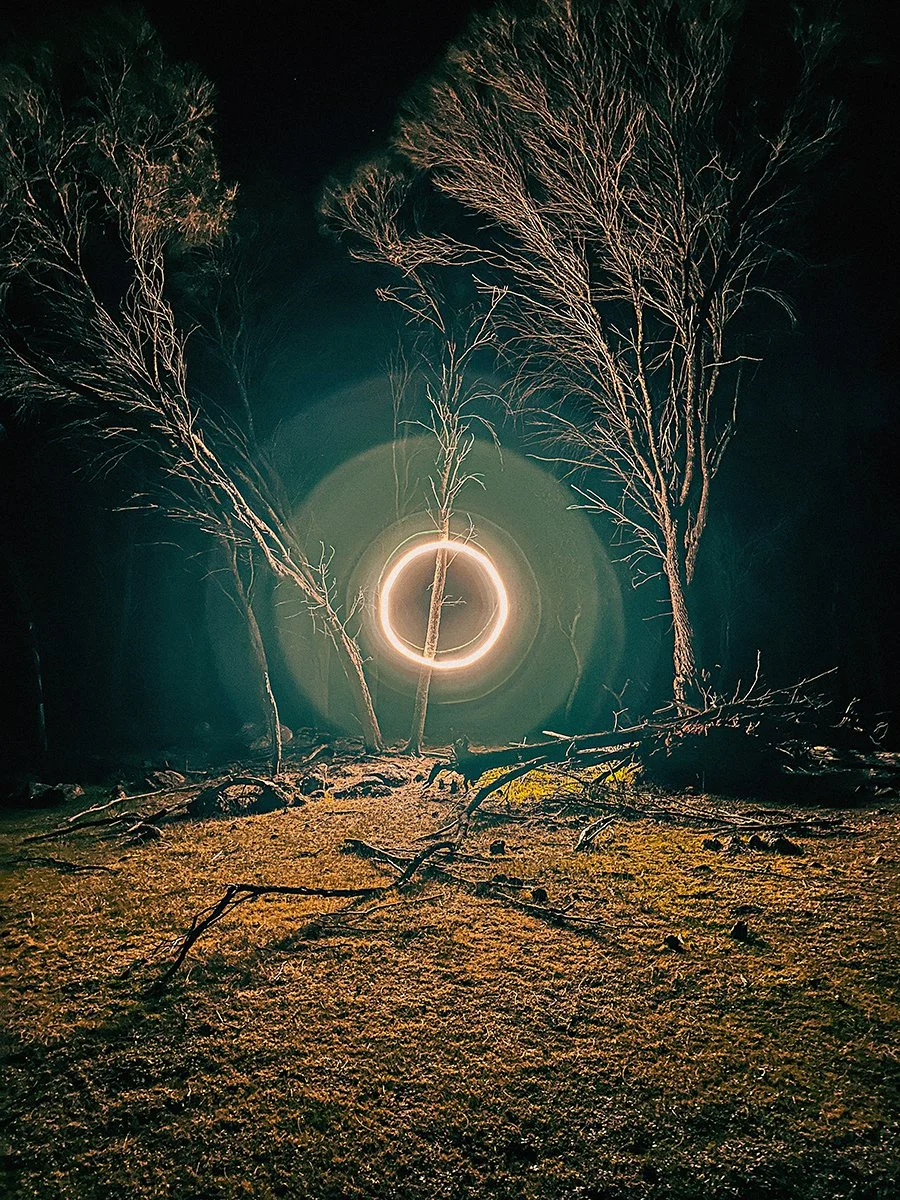
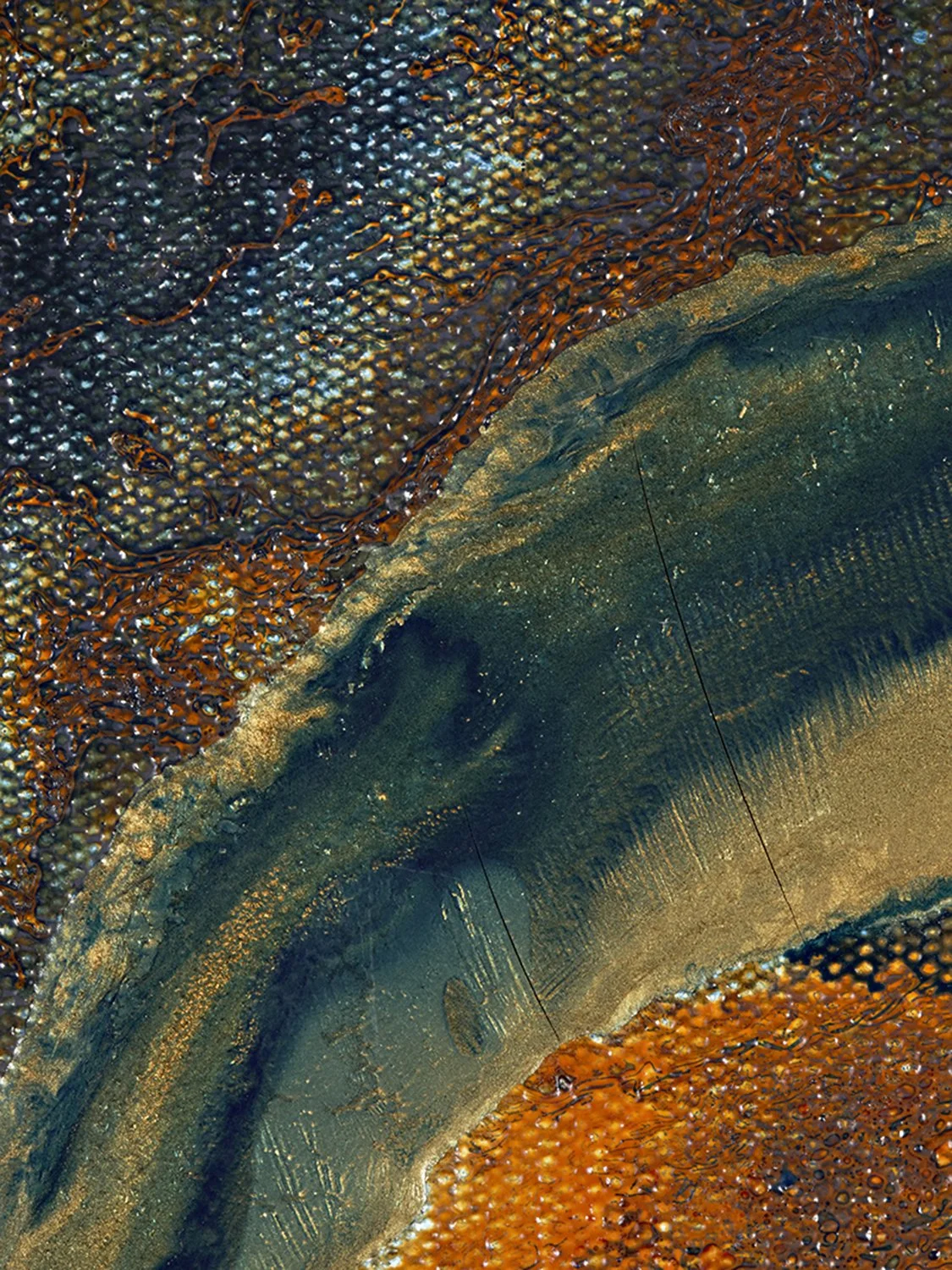
Photography and moving image have become integral to Caroline Christie-Coxon’s interdisciplinary practice, extending temporary encounters with body, material, landscape, water, light and time into the lens-based image.
Often arising from site-responsive actions and interventions, these works begin with direct experience. The camera witnesses an encounter that may be transient or impossible to preserve: a body entering landscape, a Soft Painting responding to wind or water, a shift of light, movement, immersion or disappearance.
While the lens may initially function as witness, the resulting image is not simply documentation. Through framing, perspective, duration, scale and the particular conditions of capture, photography and video become another site through which the work is formed.
The lens also introduces a productive distance between experience and image. What is physically encountered and what is subsequently seen are not necessarily the same. Reflection, projection, concealment, ambiguity and changes of scale allow the image to move beyond the event from which it originated.
Increasingly, the body operates within these works as both material and perceptual instrument — present within the landscape rather than positioned outside it. At other times, the body disappears entirely, leaving material, movement or environmental forces to carry the encounter.
Across still and moving image, the lens-based practice explores the space between presence and representation, experience and perception, the visible and what remains beyond view.