THE FLUID LOOP
The Fluid Loop first emerged in Caroline Christie-Coxon’s process-led paintings in 2001. It was not conceived in advance, but discovered through working with the behaviour of paint. Gravity, viscosity, evaporation, chemical interaction and time participated in its formation, revealing possibilities that could not be fully predicted or controlled.
Created through a single continuous bodily gesture, the loop brings mind, body and material into relation. Each iteration follows the same underlying movement yet produces a different outcome. Through repetition, it became a structure through which Christie-Coxon could consider relationship, transformation, consequence and return.
The Fluid Loop subsequently contributed to the development of Circle Culture. Within this framework, circularity is understood not simply as form or symbolism, but as a condition of participation: what enters a system acts upon it, changes within it and returns transformed.
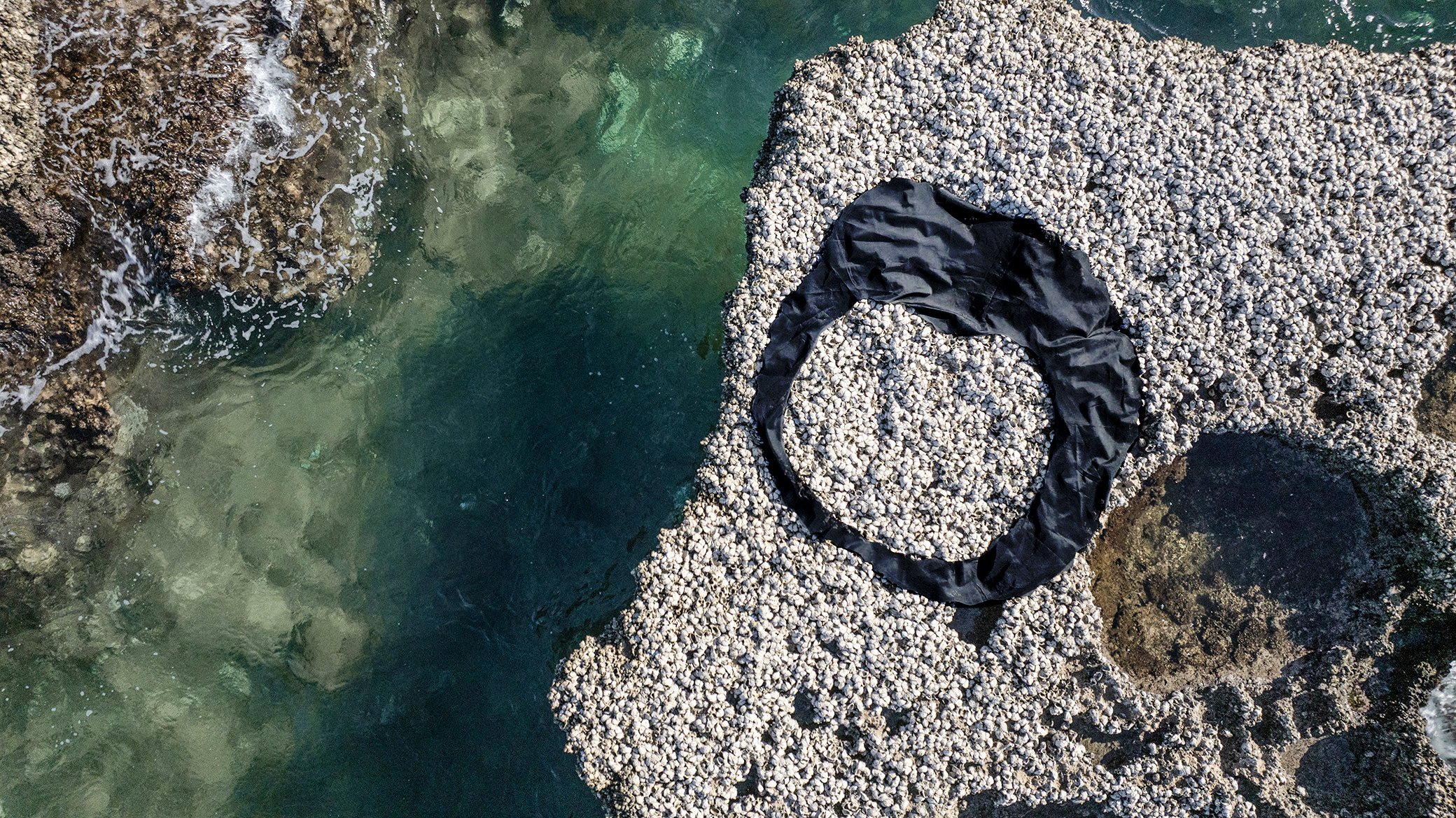
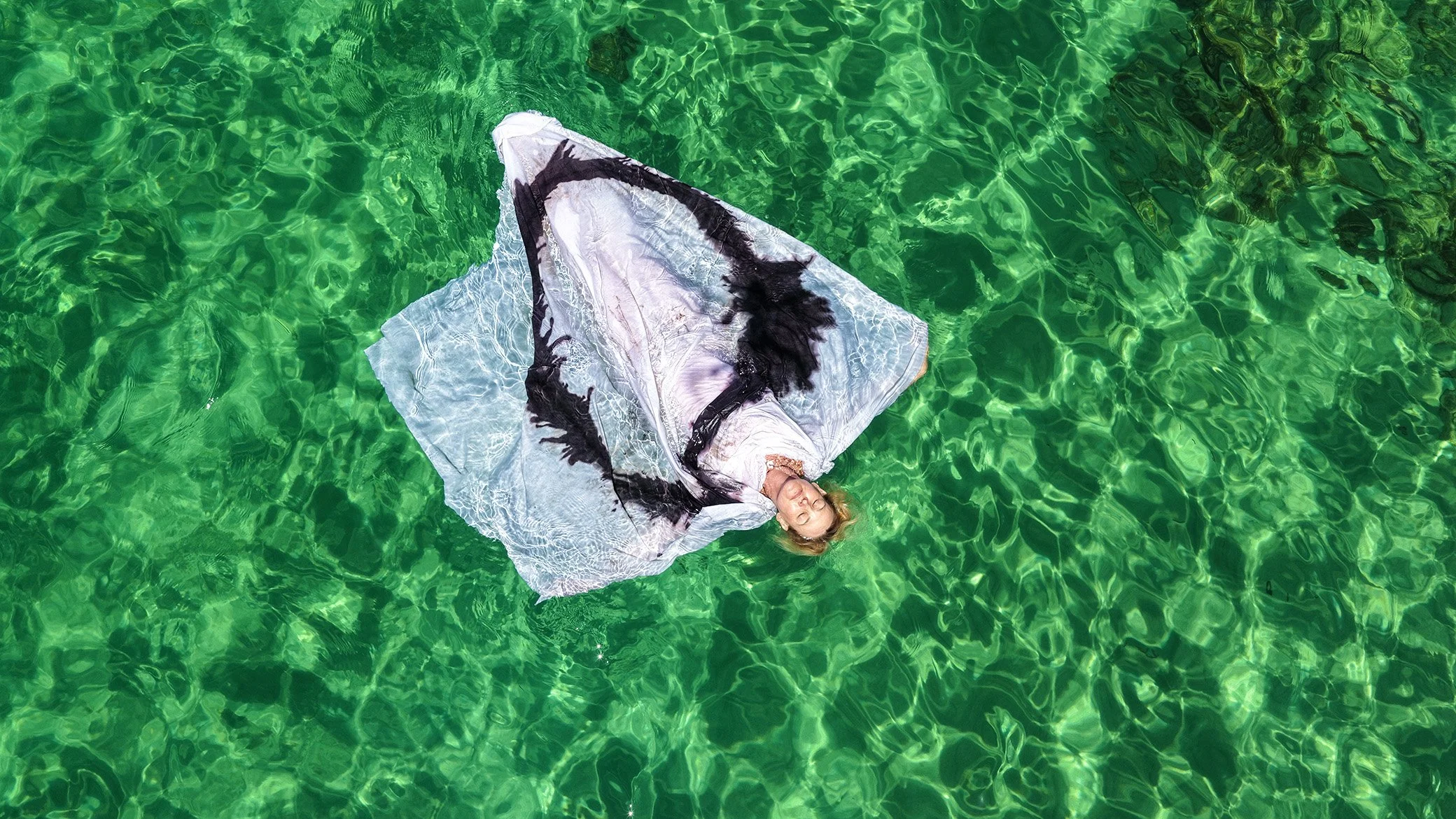
Although the Fluid Loop resonates with enduring forms such as the ouroboros and Zen ensō, its meaning arose through practice rather than preceding it as theory. It now moves across painting, Soft Paintings, photography, video and site-responsive artistic interactions, connecting the evolving material and conceptual dimensions of Christie-Coxon’s practice.